

People between the ages of 18 and 25 usually have their primary account at a bank chosen by their parents. Whether they stay there depends on the app. In in-depth interviews, we explored what they expect from it, and three things came up repeatedly: clarity, control, and confidence in taking the next step.
Why We Took a Closer Look at Gen Z’s Financial Habits
The period when a young person begins making independent financial decisions is crucial for financial institutions. With their first regular paycheck, topics such as housing, saving, insurance, and even initial thoughts about investing gradually come into play. It is precisely at this time that they form financial habits and choose the services they will turn to when making future decisions.
His expectations are shaped by the entire digital environment. Every day, he uses apps to shop, travel, communicate or manage his subscriptions. He therefore judges the speed, clarity and smoothness of a financial app against the standards set by the best digital services.
This raises an important question for product teams: at what points does a digital service help a young customer, and at what point does it start to become an obstacle for them?
How we went about it
We conducted seven in-depth interviews with economically active people aged between 18 and 25. We asked them about specific situations in their lives: how they make payments, manage their budget, handle shared expenses, save, invest, and what they do when an app fails.
In our analysis, we looked at three levels:
- Operational: What digital tools do they use for day-to-day money management, and why?
- Motivation: Do they view finances merely as a means for immediate spending, or do they see them as a way to build up savings and invest?
- Experience: What fosters their loyalty and a positive relationship with the financial app, and what, conversely, puts them off?
Two distinct profiles emerged from the interviews:
- The day-to-day user needs to make payments quickly, check their balance and manage day-to-day account affairs.
- The future planner is more interested in shared expenses, saving and making their first investments.
In everyday life, these needs overlap. Sometimes we just want to make a quick payment and check our balance; at other times, we’re dealing with savings or regular investments. These profiles help us to easily identify these different situations.
Day-to-day finances: an overview without unnecessary hassle
A user opens a financial app with a specific goal in mind. They want to log in quickly, check their balance, make a payment or send money. These are brief actions that are repeated frequently and gradually shape how a person perceives the service as a whole.
In the interviews, the features that came up most frequently in this context were biometric login, mobile payments and an up-to-date account overview. For the respondents, these formed the basis of a well-functioning banking app. They expected them to be fast, reliable and easy to use.
“Ideally, logging in should be so simple that I forget I’m doing it. It should be frictionless.”
“For me, logging into the app is a fingerprint scan. I can’t be bothered to enter a code.”
Respondents checked their accounts several times a day, particularly when making payments or waiting for a transfer.
“Sometimes five times a night, depending on whether I’m making a payment or doing something else.”
“A few times a day, about five times a day. When someone sends me money, I check if it’s come through, and vice versa.”
However, to make decisions, a person needs more than just their current balance. Towards the end of the month, they might look at their transaction history – which shows dozens of transactions – and still not know how much more they can afford to spend. Respondents therefore appreciated the automatic categorisation of expenditure, spending reports and graphical overviews. These helped them to see more quickly where their money was going and where they were spending more than they’d planned.
“It automatically categorises by payment type; the graph looks neat, and you can tell that 20 % is on food and 15 % on housing.”
Savings sub-accounts, separate from the main balance, served a similar purpose. Money set aside for a specific purpose was not mixed with the budget for the current month. This separation simplifies decision-making even without complex financial planning.

A good financial overview should help the user answer three questions:
- What has happened? Where has the money gone?
- What does this mean for me? How is my budget performing?
- What can I do next? Adjust my budget, transfer money or set up an alert.
When designing an overview, report or notification, it is therefore worth checking which of these questions it addresses. Every piece of information should help a person understand the situation or take the next step.
They came to their main bank through their parents or an early offer
Respondents came to their main bank in two ways. For the majority, their parents opened their first account whilst they were still children or during their studies. It was therefore not their own decision, but rather a matter of inertia.
“I have it because I had a student account set up with my parents.”
“I have it because of my parents; they’ve been with them for a long time.”
However, some of the respondents had chosen their bank themselves whilst still at university. Their decision was influenced by those around them or a specific introductory offer. One respondent opened an account with a bank at a time when it was offering €30 for opening an account, and has been using it as their main personal account ever since.
The research thus suggests that an early start to a banking relationship can arise through family, one’s social circle or even a simple financial incentive. However, whether a customer remains with the bank is influenced by their day-to-day experience of the service.
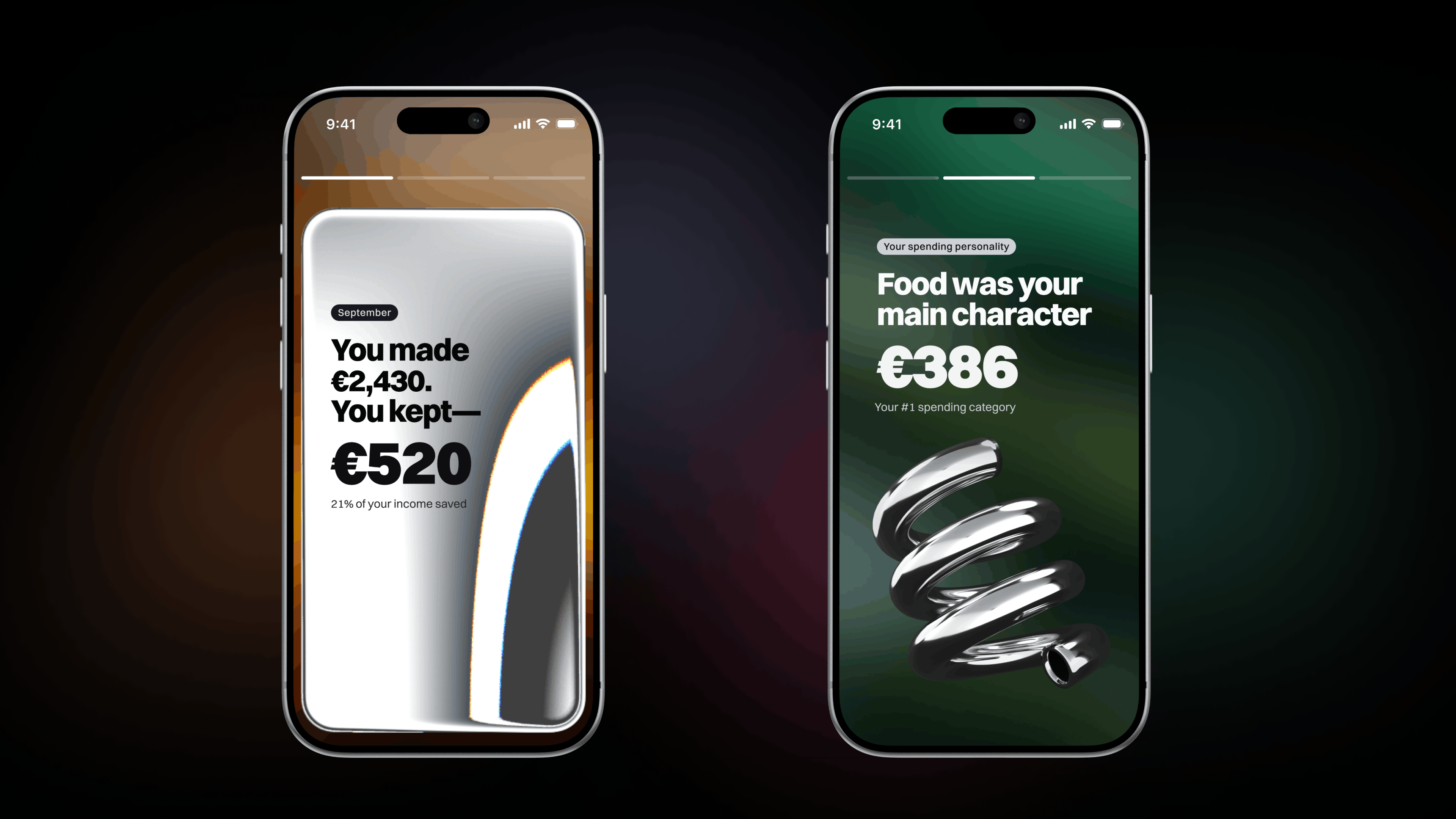
In specific situations, young people also turn to other services: they use Revolut and Viamo for international transfers and payments, and Settle Up for splitting group expenses.
Their value lies not merely in their individual functions. They help to resolve the whole situation quickly and naturally. After a group lunch, there’s no need to tally up individual items, remind people of what they owe or wait for a transfer.
This is an important signal for banks. Having a primary account does not automatically mean a primary relationship. Where a young customer ends up will depend on their experience with the app and its ability to handle specific situations.
When something goes wrong: the customer needs to be kept in the loop
The true quality of an app becomes apparent when something goes wrong. Technical glitches, unclear payment statuses or complicated verification processes via a separate token app create uncertainty. In such situations, the user needs to know what has happened, what they can do and where they can find help.
Tasks that could not be completed digitally also caused significant frustration. Respondents mentioned changing limits, closing accounts, technical issues, account management and searching for documents. An unexpected referral to a branch or telephone support prolonged the process and made them feel they had lost control.
“Because of the app, I had to go to a high-street branch on the other side of town. That’s absurd. What if I’d been away on holiday? I don’t want to speak to anyone in person unless it’s absolutely necessary.”
“I suddenly needed to change my card withdrawal limit and couldn’t do it via the app, only in person at a branch, which I couldn’t do at the time.”
“I couldn’t find the loan agreement in the app and the bank referred me to a paper copy, which was a bit much.”
The user is unaware of the processes and systems running in the background. They simply realise that they have not achieved the desired result. When digitising, we therefore need to understand the entire journey: the customer’s steps, the information on the screen, security rules, internal processes and the systems that process the task. Only then can we identify where the real barrier lies and what can be changed.
A well-designed service offers three clear paths:
- The user completes routine tasks independently.
- If they are unsure, they receive clear guidance directly at that stage.
- If they encounter a more complex problem, they will be put in touch with a member of staff who is familiar with the context so far.
The ability to quickly dispute a suspicious payment via the available support channels gave respondents the feeling that their bank is able to support them at a critical moment.
“When I fell victim to a scam and accidentally sent money somewhere, the bank was on my side, which made me feel reassured.”
A respondent described a similar experience involving an unwanted annual subscription, which left her in the red. With the bank’s help, she managed to get her money back. Trust is therefore also influenced by the way in which a service guides a customer through resolving a problem.
For product teams, this provides a practical perspective on reliability. It is worth monitoring technical availability, the success rate of key tasks, points of failure and the time taken to resolve issues. An application may be online whilst still leaving the user without a response.
Saving and investing: certainty when making your next decision
The future planner wants to make more of their money. They are considering setting aside a reserve, regular savings or making their first investment. The biggest barrier is uncertainty about where and how to start.
Respondents described investing as a complex and confusing process. Questions were raised about risk, fees and the very point of investing a small amount. They often considered sums of between €30 and €50 too small for investing to make sense, and tended to associate a realistic return with an investment of thousands of euros. The fear of loss was more pronounced in an environment full of technical jargon and aggressive promises of getting rich quick.
“It’s a massive process; at least that’s how I remember it from my childhood – that it’s a complicated process.”
“I don’t know whether investing €10, €20 or €30 across various investment options makes any difference at all.”
“I don’t see it being worth my while with €100, €500 or €1,000 to start with. I realise I need to have a larger investment portfolio.”
Getting started with investing therefore requires lowering both the information and emotional barriers. People need to understand what might happen to their money, what risks they are taking and how much the service will cost them. The following can help them:
- simulations of various scenarios over time,
- explanations of risk using specific examples,
- a transparent breakdown of fees and potential losses,
- the gradual provision of information in line with the decision-making stage,
- linking the investment to a goal they understand,
- the option to start with an affordable amount.
“If I knew there was a tool that could teach me. And show me what would happen if I set aside €50 for 30 years.”
Some respondents found their way to growing their money through small, automatic mechanisms. Rounding up payments and putting the difference into a fund reduces the whole decision to a single click and doesn’t require a one-off deposit.
“I’ve signed up for rounding up to the nearest whole number, where the bank will transfer the change to specific funds. I can gradually build something up, bit by bit.”
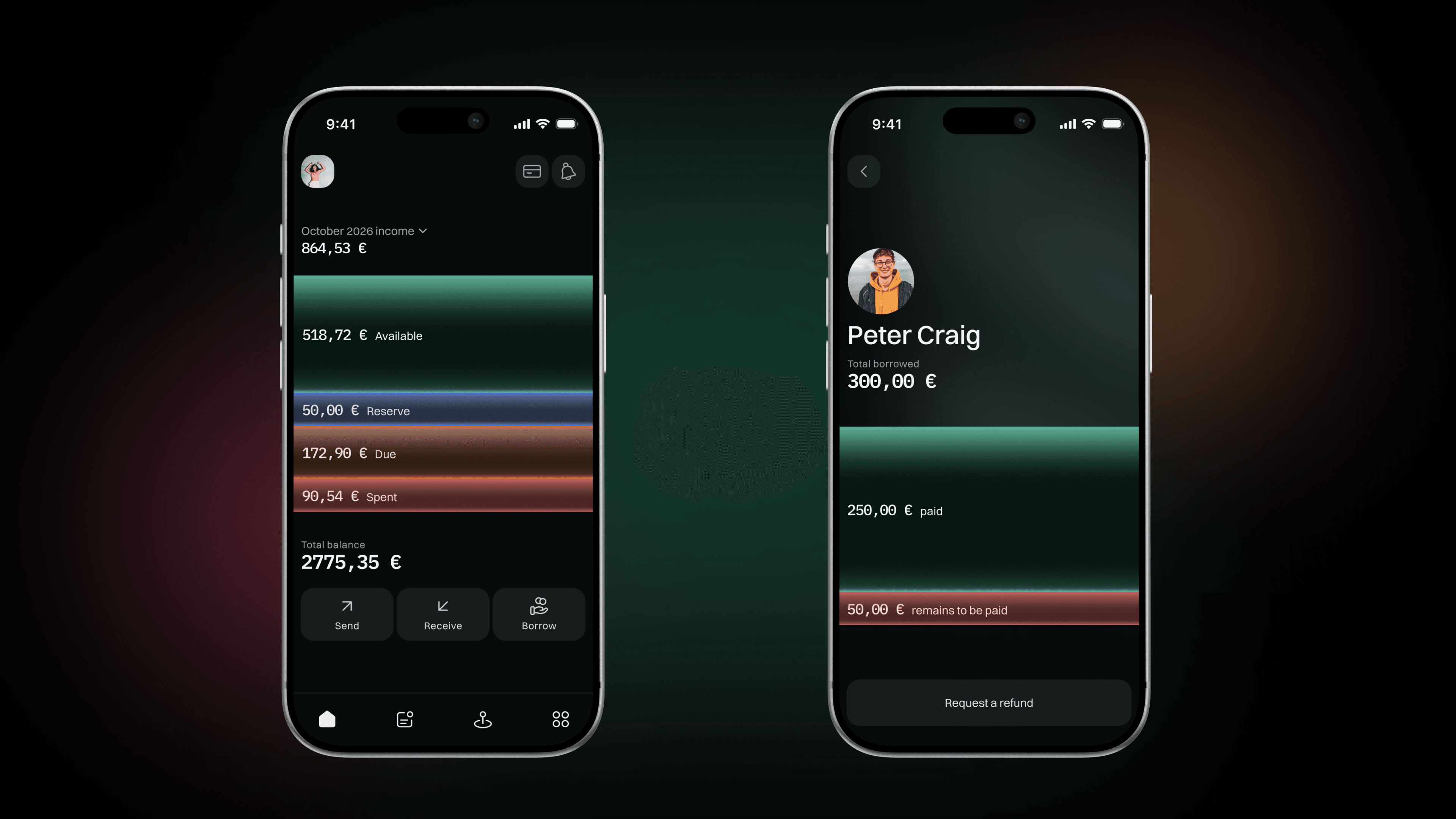
Content design plays a major role here. Accurate information must be presented in the correct order and in language that helps people make a decision. The meaning of a term, a fee or a risk warning is most valuable precisely at the stage to which it relates.
They associate getting started in investing with a person, not a screen
Respondents were not just looking for a better investment product, but also for guidance. They placed their trust in a specific individual and in the experiences of people around them, rather than in advertising.
“I’d like an expert with whom I can have a chat about investing and who can advise me.”
“I’d like to get to know more people who’ve had good experiences – preferably people I know. I automatically have less trust in the internet.”
“I’ll find someone who can explain everything to me, and then I’ll enter the world of investing.”
For an institution, this means that getting started with investing is not just a matter of a screen. It is a combination of information provided within the product and a person who is available at the moment a decision is made, ideally someone who can be contacted directly via the app.
Unsolicited contact takes control away from the client
Personalised offers are similarly sensitive. A click may indicate curiosity, comparison or an attempt to better understand the product. Readiness to engage should therefore be a conscious decision on the part of the user.
“I accidentally clicked on the pension savings category, and they contacted me unexpectedly the next morning, saying they’d seen that I’d supposedly shown an interest in it, but that wasn’t true.”
“I wanted to close my savings account. They made me go to the bank in person, which would have been fine, but then they rang me three more times and it was really annoying.”
Respondents preferred offers delivered via in-app notifications and personalised content within the app, which they can access when they have time. Useful personalisation explains why a person is seeing a recommendation, what value it can bring them, and what will happen if they proceed. At the same time, it leaves them in control of any further contact. For a financial institution, this is the path to a relevant offer that fosters a long-term relationship without undue pressure.
What this means for financial institutions
The findings from the interviews can be distilled into four principles for designing digital financial services.
Design according to the situation the user is trying to resolve
The user comes to change a limit, find a document, understand a payment, split a bill or find out how much they can spend. The entire process should be geared towards this outcome. Internal product categories, systems and process ownership should remain in the background.
Give clients control over routine tasks and issues
Self-service should cover common tasks that can be safely carried out digitally. When an error occurs, users need a clear overview of the situation, guidance on the next step and accessible support. A process designed in this way encourages the completion of tasks and reduces unnecessary pressure on branches or support teams.
Explain decisions directly within the product
When it comes to saving, investing, insurance or borrowing, clients need to understand the consequences of their decisions. Content, interaction and visualisations are therefore integral to the design process right from the very first prototypes. Clarity determines whether a person can proceed with confidence.
Integrate the user experience with processes and technologies
A simple screen can take precedence over complex integrations, rules and legacy systems. A high-quality digital product is created when the team addresses the user journey alongside technical feasibility, security and the service’s post-launch operation.
At GoodRequest, when it comes to financial products, we bring together research, UX, content design, technology and business processes. This enables us to assess whether a design will benefit the client and whether it will function reliably in a real-world environment.
We find the same needs outside the banking sector too
The research was based primarily on experience with banking and fintech apps. However, the need for an overview, control and certainty also applies to other financial services.
An insurance customer does not need to open the app every day. When they do need it, they are often dealing with an important or stressful situation: looking for a policy, checking their cover, updating their details, reporting a claim or waiting for it to be processed. At such times, they need to quickly understand the situation, know what to do and be confident that the process is moving forward.
The frequency of contact may be lower, but the significance of a particular moment is often greater. This is one reason why the principles of clear content, digital independence and readily available support are valuable across the banking, insurance and investment sectors, as well as other financial services.
Conclusion
Young people enter the world of finance through a series of small and larger decisions. In the morning they check their balance, during the day they make payments, and in the evening they might think about saving or making their first investment. In each situation, they need slightly different kinds of help.
Three needs emerged repeatedly from the interviews: clarity, control and certainty about the next step. For financial institutions, these provide a practical framework for decision-making regarding digital services.
An overview helps people understand what is happening with their money. Control enables them to complete a task and resolve a problem. Confidence is built through clear information, reliable service and accessible support.
A financial service that meets these needs becomes an integral part of the client’s everyday life. At the same time, it lays the foundation for a relationship that can continue even when more complex financial decisions need to be made.
According to respondents, the ideal app combines two things: full in-app self-service, which allows them to sort out their needs on their mobile, and the option to contact an expert online directly from the app. It is precisely this combination that links the control they have over everyday tasks with the confidence they need when making more complex decisions.