How we built Partners a system that opens new business for advisors and raises the quality of client service
About the client
Partners Investments is an investment firm. It gives tied investment agents and their clients access to investment products across the entire lifecycle of an investment, from opening the investment through ongoing portfolio servicing to exiting it.
Partners Asset Management is a fund management company that runs collective investment funds for retail and premium clients, from a short-term investment fund through bond funds to a real estate fund. In 2025, its Short-Term Investment Fund took first place in the Top fond Slovakia awards in the best-selling bond fund category.
Both companies belong to the Partners Group Holding SK financial group and operate under the licence and supervision of the National Bank of Slovakia, each holding a different type of authorisation and therefore carrying different regulatory obligations. Their strong market position speaks for itself: together they manage more than EUR 1.5 billion in client assets.
The starting point
When we started working with Partners, their original system was running into technical debt and capacity limits. It could not deliver the level of usability advisors needed, which significantly stretched the time they had to spend on individual tasks. Servicing hundreds of diverse portfolios, ever stricter regulatory requirements from the NBS, the incoming European DORA regulation and the ambition to expand into new markets all made it clear that the company needed a new, modern asset management system. One that would become a dependable foundation for its further technological and business scaling.
What we set out to achieve
At the start of the project we set a clear goal with the client: free advisors from unnecessary administration and remove external calculators and parallel tools from the investment process altogether. The new system also had to make better use of the data on clients and portfolios, and in doing so keep raising the quality and standard of the service.
From a business perspective, this was a direct route to growing assets under management. Once the application takes the routine work off the advisors and proactively surfaces new opportunities, it frees up clear time for what matters most - first-class personal service for their clients.
01The brief
What needed solving
The investment agenda at Partners ran in a system that had grown naturally with the needs of the business. Every new function added another screen, so information about a client and their portfolio ended up spread across dozens of pages. An advisor who needed the full picture could only get it by working through several screens in sequence. With hundreds of client portfolios, finding the data took more time than the decision it was meant to support. The brief therefore rested on three pillars: aggregate the data in one place, cut the number of screens and strengthen the security of the solution.
Business layer
Advisors had no consolidated, real-time view of the state of their client portfolios. The system did not proactively flag opportunities to optimise a portfolio or to offer additional services. Legacy technical debt also pushed users into lengthy workflows, so a large part of portfolio monitoring had to be done manually in other tools.
Regulatory layer
Because the system serves several entities across the financial group from a single codebase, the application became a critical part of the group's internal infrastructure. During development, the strict European DORA regulation also came into force, pushing financial institutions towards significantly stronger cybersecurity and tighter management of third-party risk. From the outset, the resulting application therefore had to meet the highest standards of data security, auditability of operations and operational resilience, so that the holding would be fully prepared for the new European regulatory requirements.
Architecture layer
The client needed a multi-tenant solution capable of serving multiple organisations from one shared platform, with clean separation of data and entity-specific configuration. The architecture is designed so that the platform is technically ready to take on further entities without a change in structure amounting to a rebuild of the whole application from scratch.
02UX, frontend, integrations
Understanding the fintech domain
Before we drew the first wireframe, we had to break down in detail how an entire investment company works. Our goal was to understand the client's business model in depth, along with the intricate regulatory requirements and above all the complex end-to-end investment processes. We mapped the full lifecycle, from opening an investment through ongoing portfolio management to the final redemption.
Ergonomics redesign for advisors
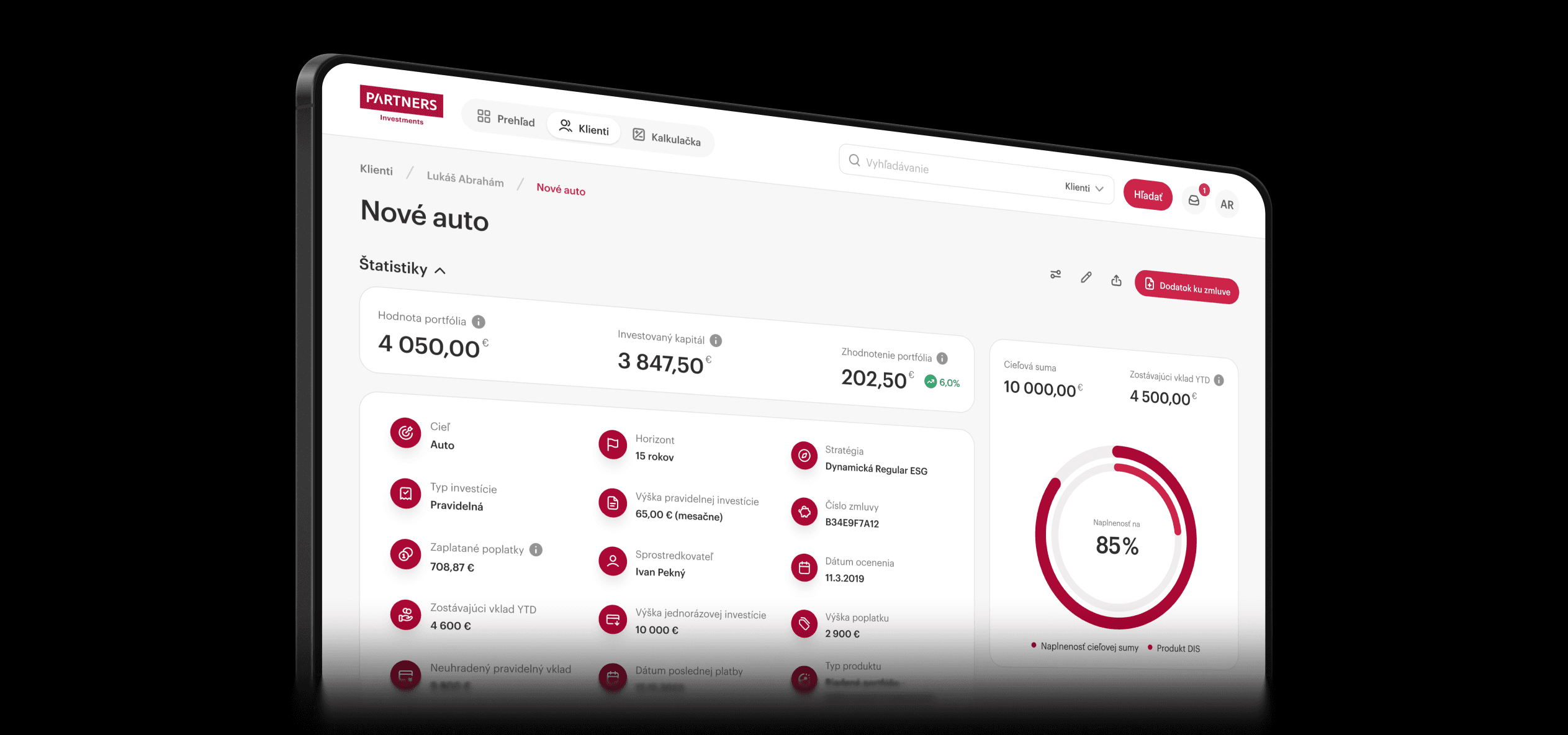
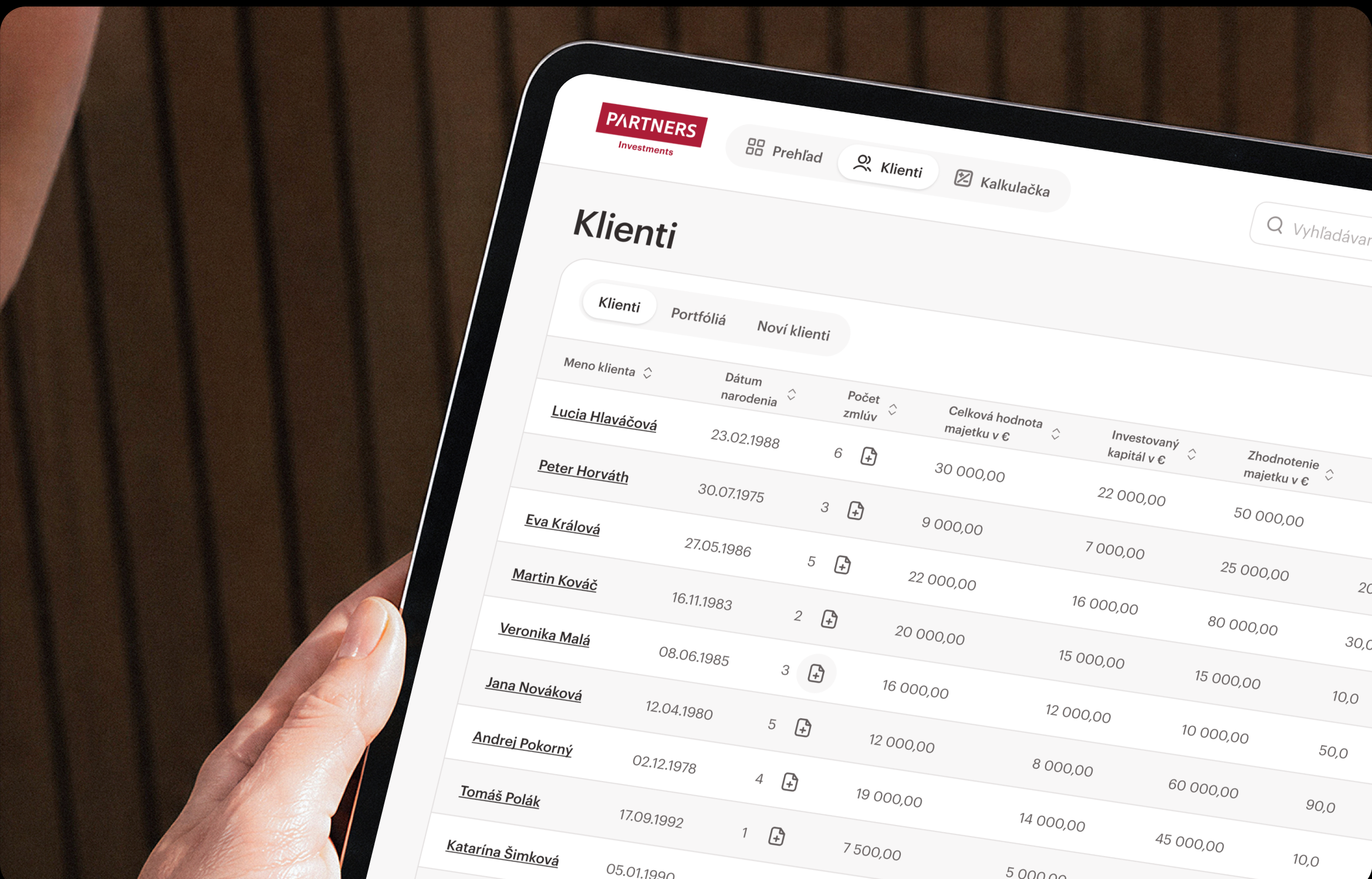
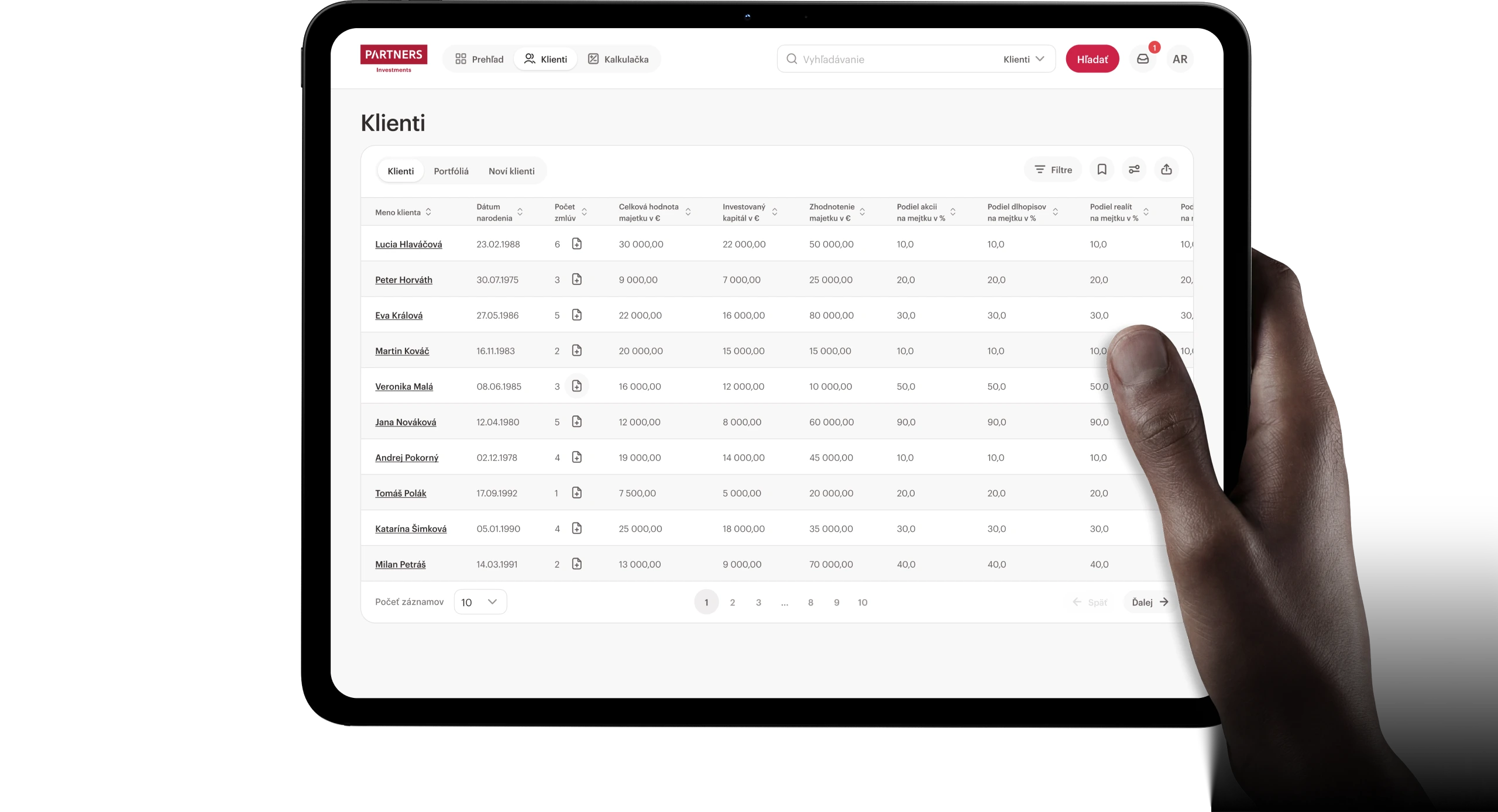
The core idea of the new design was that an advisor should have an immediate overview of their entire client book the moment they open the AMS application, and be able to plan their daily priorities from that data. The system was there to help them proactively and to detect in good time the priorities they should attend to.
Requirements gathering and desk research
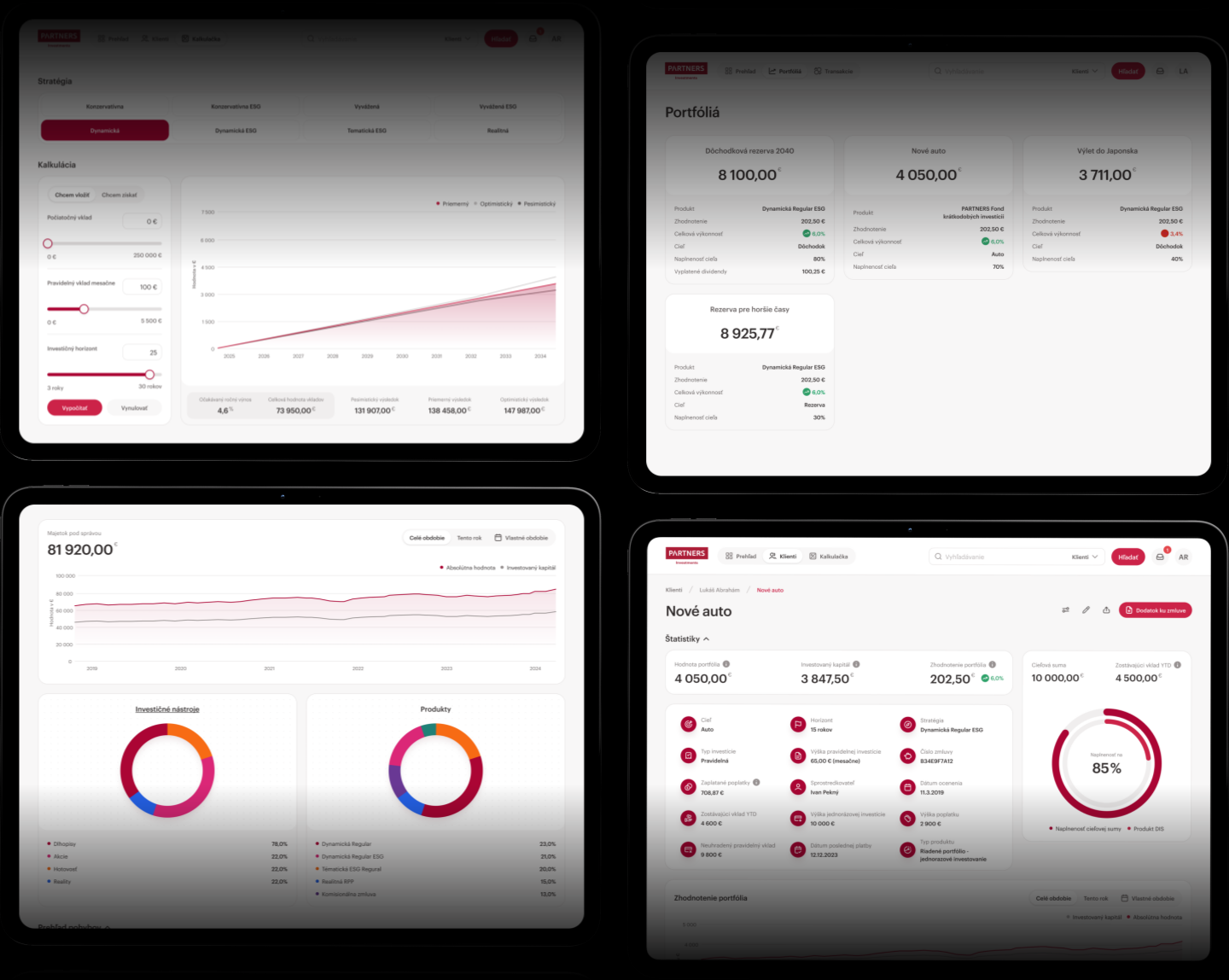
We put together a focus group of advisors who worked with the original system every day. Across a series of workshops we mapped their real workflows in detail, named the bottlenecks and found room for improvement. Those business inputs turned into wireframes and interactive prototypes for the key flows: client management, portfolio management and the investment process itself.
User testing
We then validated the prototypes across three rounds of user testing with nine agents. Their direct feedback surfaced a wealth of detail from everyday workflows, particularly around how advisors work with client data. These are details we would never have spotted from a desk in the office, yet they make an enormous difference to the quality of an advisor's work in the field.
We built the final UI on our own design system, which guarantees visual consistency across tenants and makes launching new markets fast.
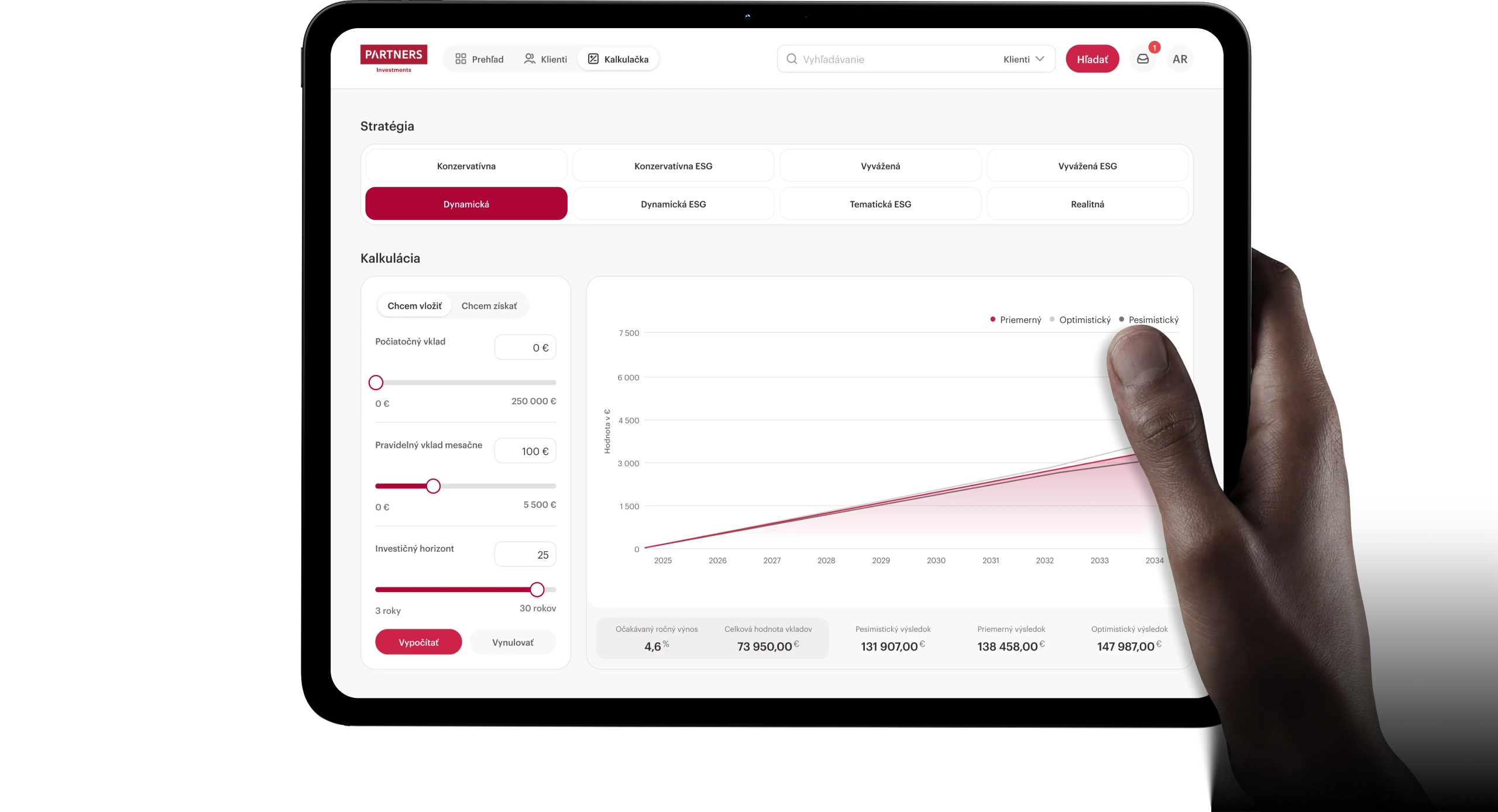
Selected elements of the advisor interface
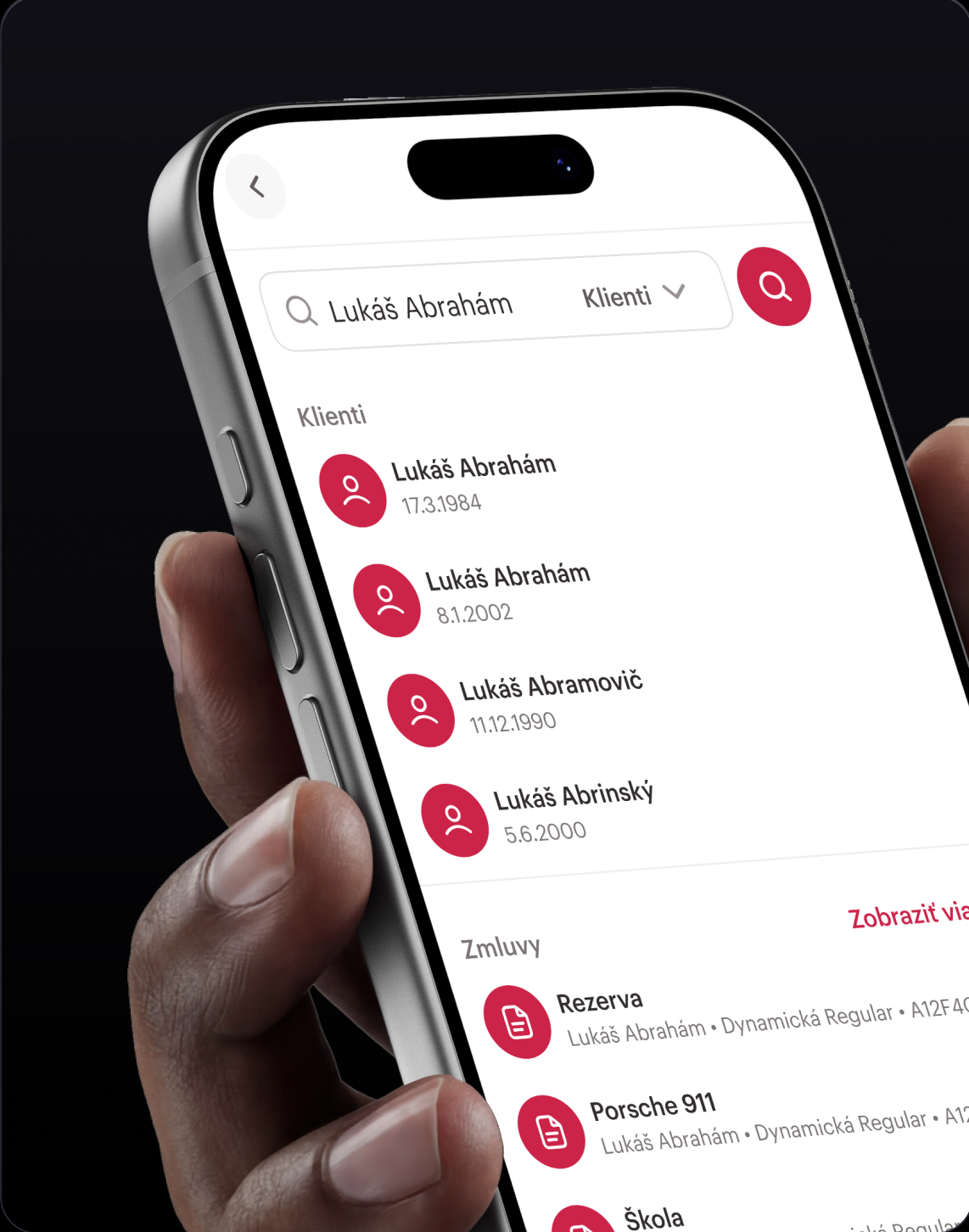
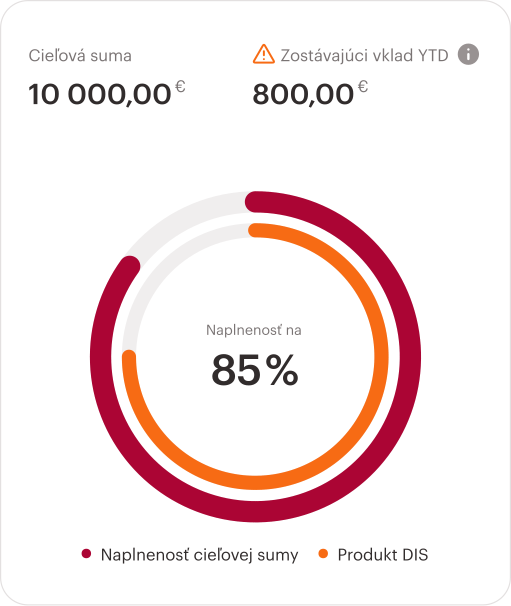
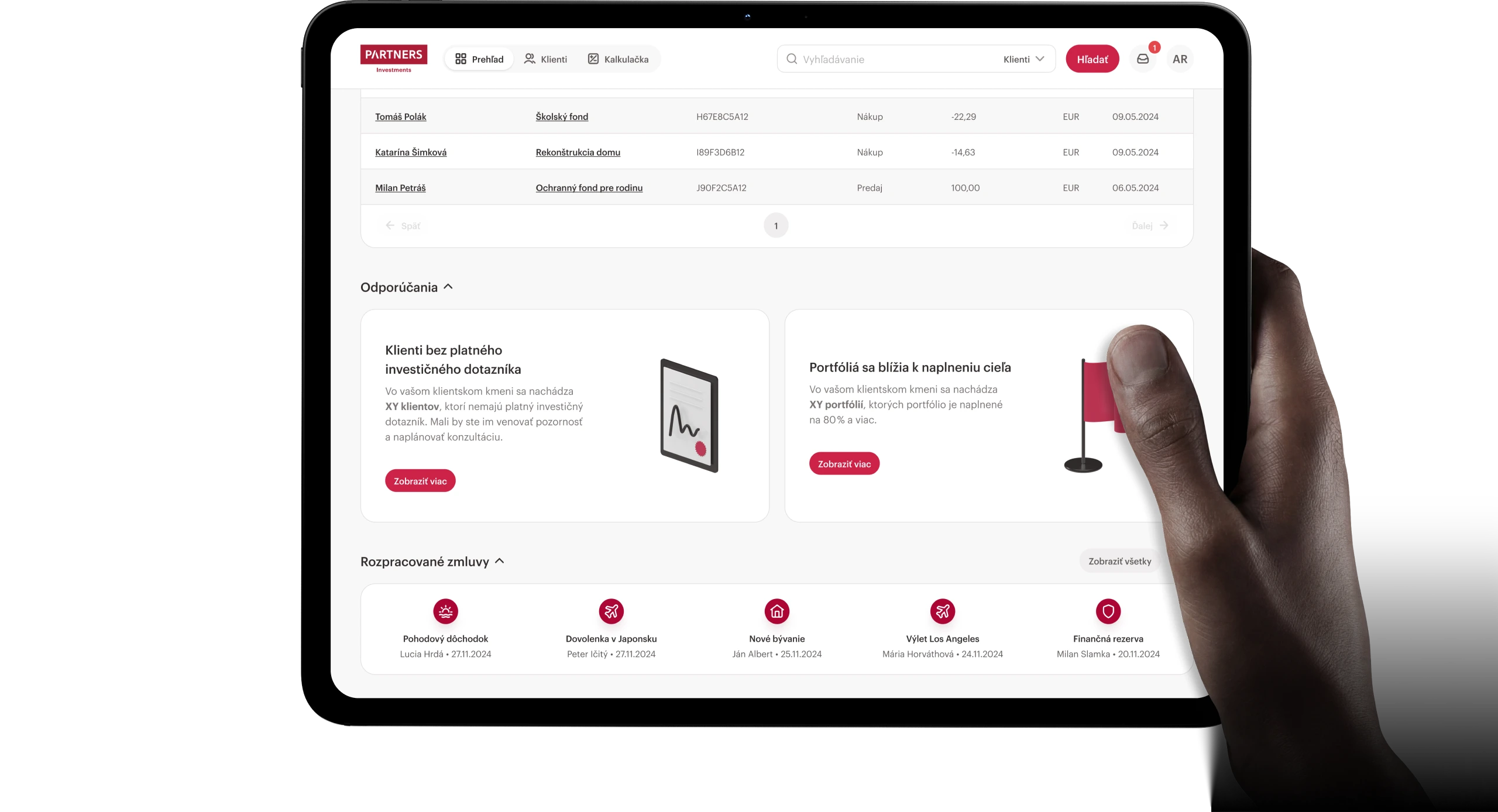
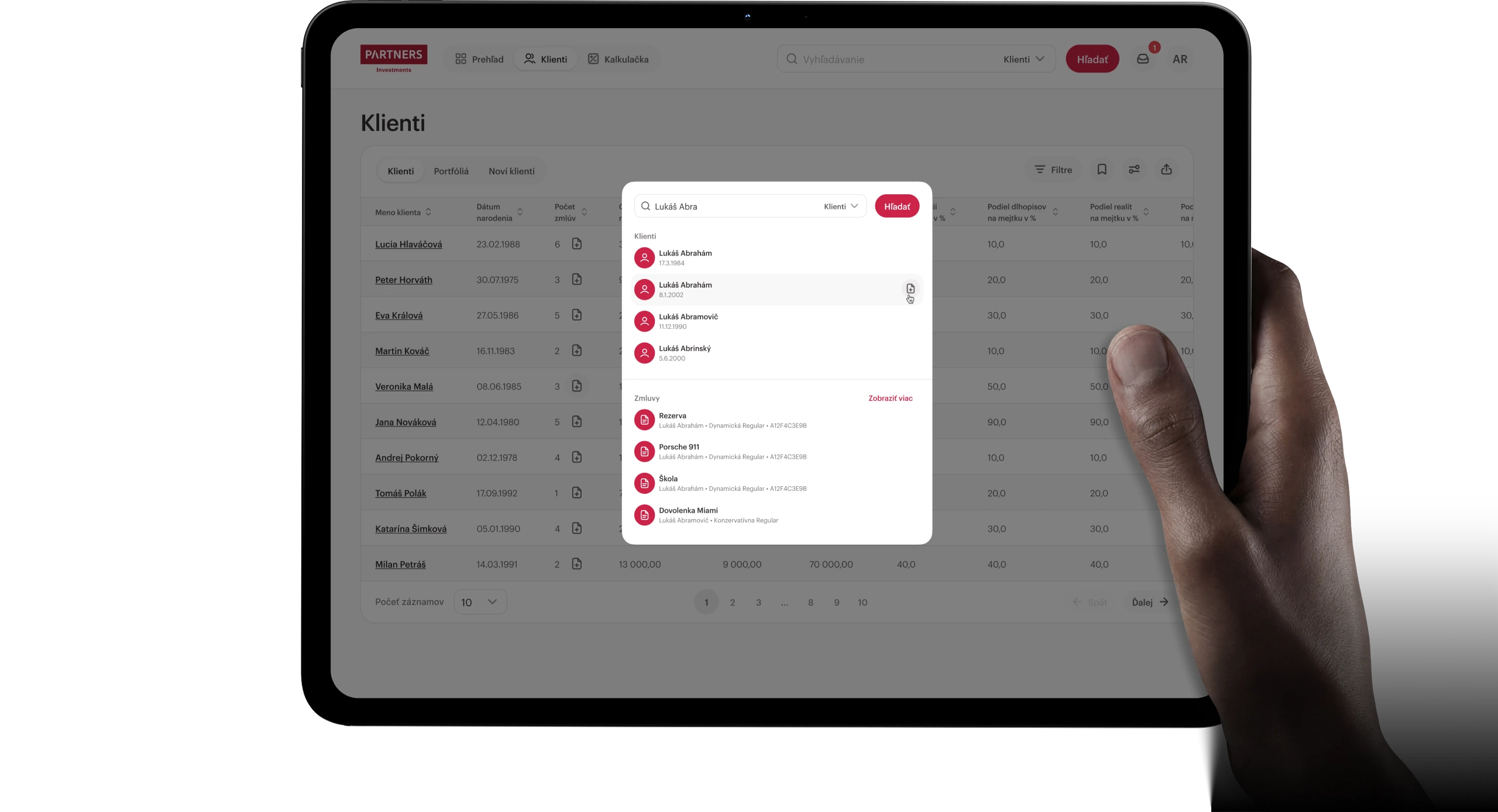
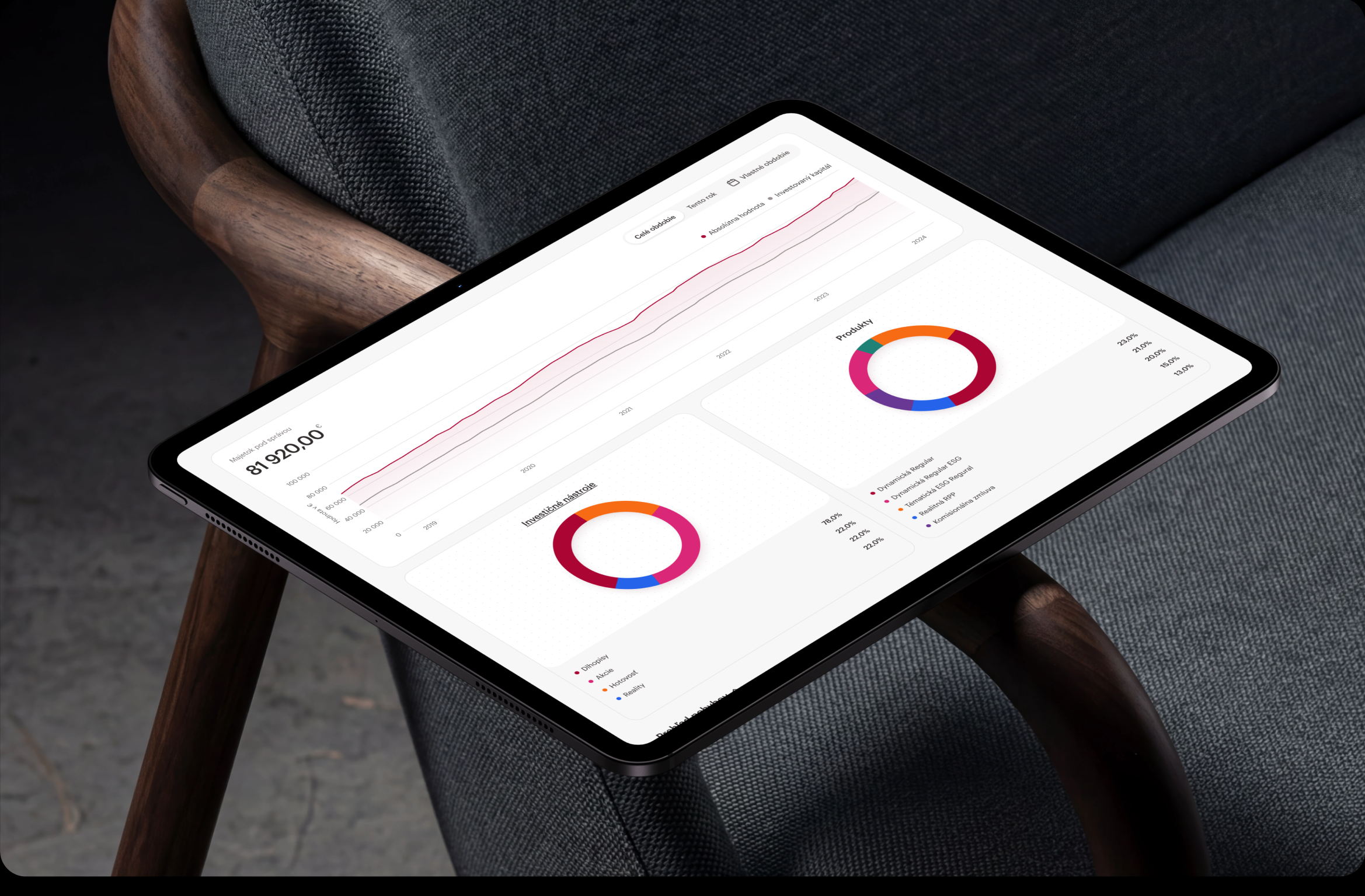
The AMS application has three main parts: the advisor interface, the client interface and the back office. Together they cover the full operation and all communication. To make it easier to picture how the system changes day-to-day reality, we picked four key elements from the advisor interface:
03Architecture
Architecture and development
A critical fintech application has to handle the load of its users and a strict regulatory audit without flinching. We built the system on a proven combination of Next.js, Express.js, PostgreSQL and Redis.
Thanks to a robust multi-tenant architecture that separates data and configuration across organisations and markets, a single codebase now runs two independent organisations: Partners Investments and Partners Asset Management. Both have strictly separated data, their own configuration and their own regulatory framework.
The integration with the backend logic rested on precisely defined contracts, a versioned API and rigorous error handling. That ensured a technical change on one side would not destabilise the other. Security, auditability of operations and operational resilience are built into the foundations of the architecture. We treated the DORA requirements on operational resilience as a hard acceptance criterion from day one, not as something to catch up on before an audit. We also aligned the entire release process precisely with the client's internal IT team and their regulatory windows.
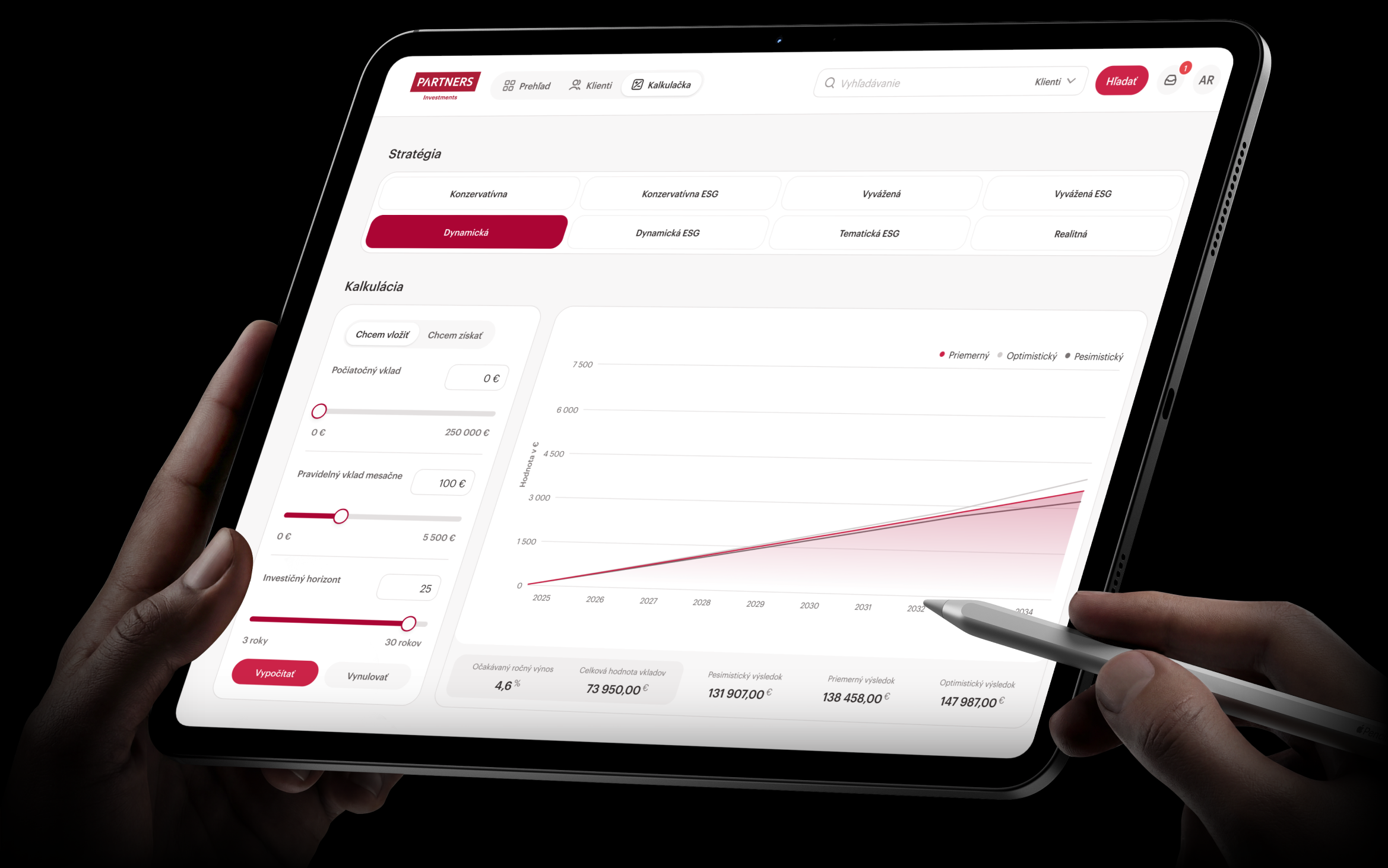

Simplifying a complex system while ensuring it remains compliant with regulatory requirements is no easy task. GoodRequest has managed to do just that, and users can now find everything they need on a single page.
Portfolio card
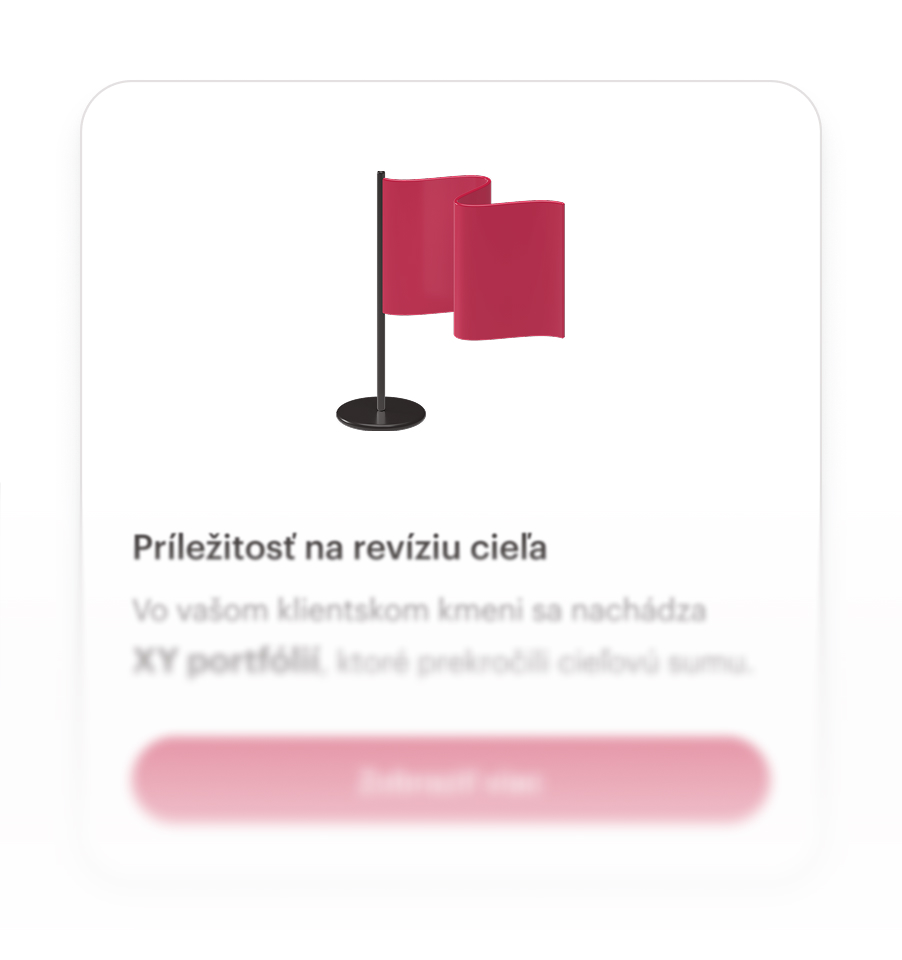
Recommendations for the advisor
Investment calculator
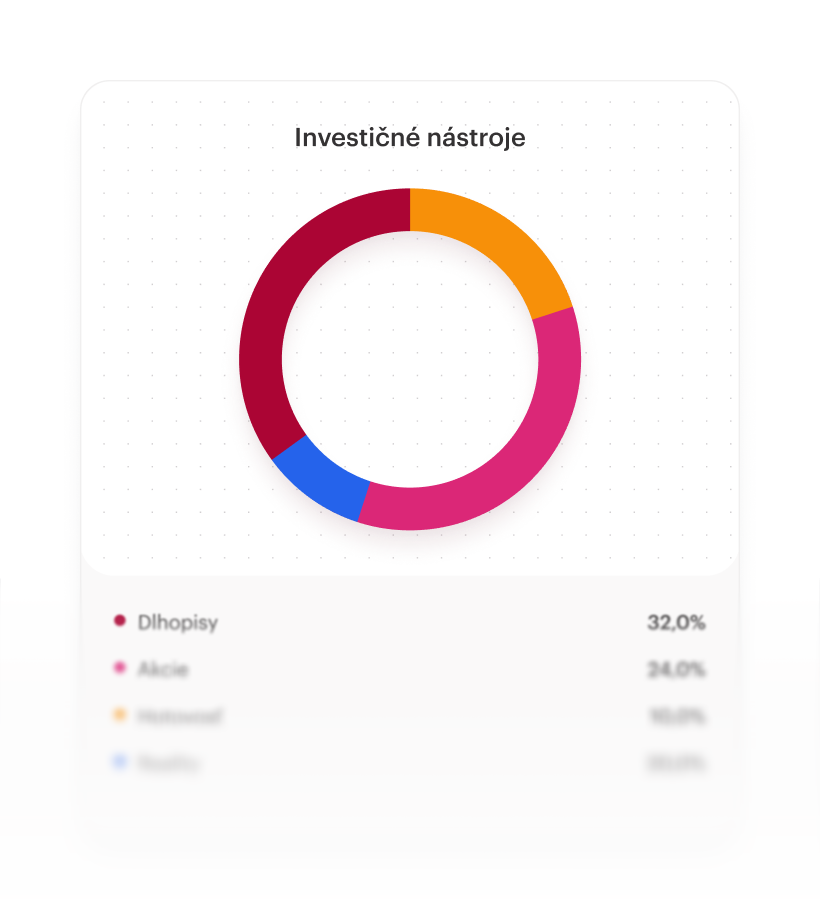
Portfolio composition
Goal progress
04Impact
What the new solution changes for advisors and for the business
For advisors, we integrated the entire routine around managing client investments into a single environment. The result is less time needed to model scenarios, issue a new contract or an amendment, and immediate access to a portfolio overview without unnecessary administration. That leaves advisors more clear time with the client, and the goal is for AMS to cover the whole investment process without ever having to open external systems and calculators.
From a business perspective, the new system helps eliminate critical gaps - it reduces the number of clients without regular servicing, the number of “forgotten” portfolios, portfolios with zero value and clients with unpaid fees. It also opens the way to identifying new business opportunities more precisely, which directly supports growth in total assets under management (AUM).
05Summary
What the project taught us
A complex fintech application cannot be built in a few months, and this project showed us clearly why. We worked our way through moving regulatory requirements, the integration of several data sources and the demanding management of three parties, all against firmly set deadlines.
On the architecture side, two key decisions from the beginning of the project were confirmed. Designing the system as multi-tenant from day one meant we can securely serve both organisations in the group from a single codebase, each with fully separated data and its own configuration. The same holds for compliance: when it is a natural part of development from the start, the regulator's audit is only a formal check rather than a last-minute scramble.
In UX and analysis, our greatest asset was deep domain knowledge from financial services. Because we understand this segment, we knew exactly what the client needed from us and why, without having to have the basics explained to us. Combined with three rounds of user testing with agents, that shared context is what let us deliver a system that is not only technically sound but as intuitive and useful as possible for advisors in the field.
Ready to start a project?
Let's build together.
Schedule a call or send an email.
Contact usNot sure where to start? Download our product brief template.